
Access Control Systems: Why Keys and Padlocks No Longer Protect Your Business
October 15th, 2026
The Hidden Cost of Mechanical Keys
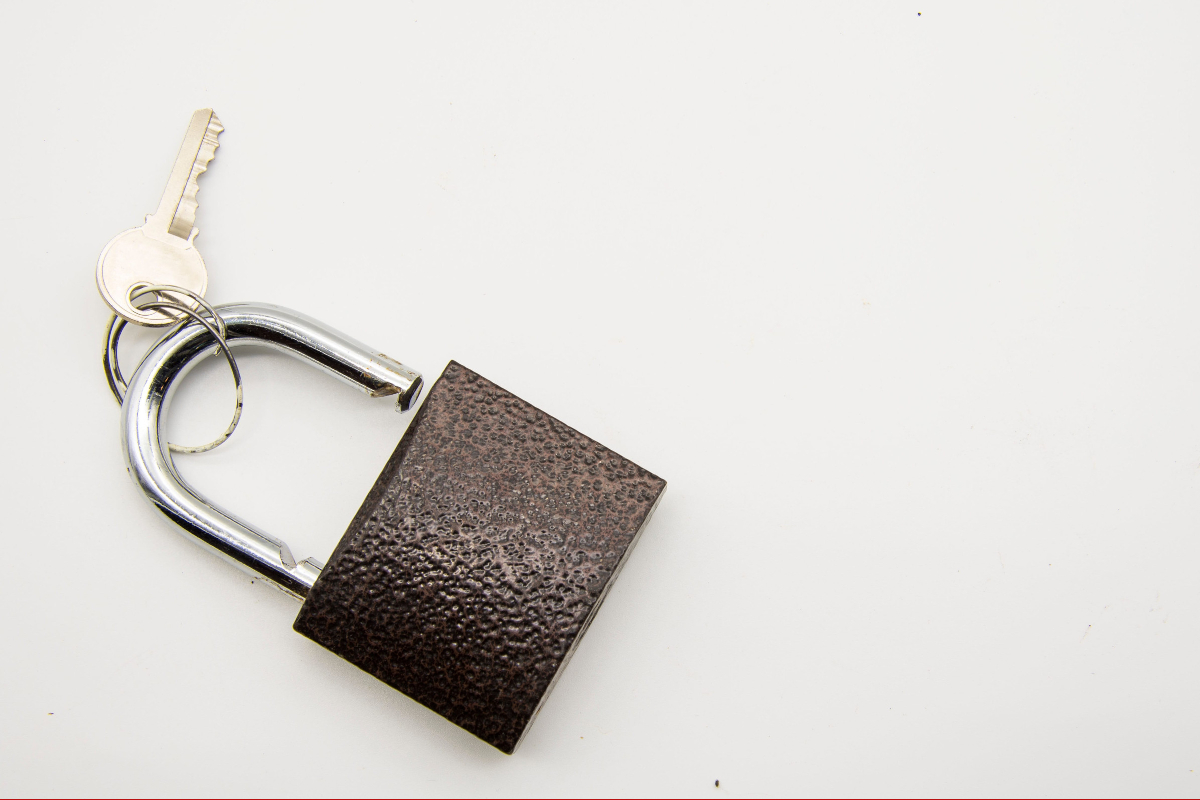
Most businesses still lock something with a key, a padlock, or a mechanical lock on a door. There is nothing wrong with that until you need to know who opened it, when, and whether that person still works for you. A key is a credential with no memory. It opens the door whether it is in the hands of the facilities manager or someone who found it in a parking lot.
The costs of that blind spot rarely show up on a budget line. They show up as a rekeying invoice after a departure, a storage cage nobody can account for, or an insurance conversation after a break-in that leaves no usable record of who came and went.
What a Padlock Cannot Tell You
Consider the questions you actually ask after something goes missing. Who had access to that room last Tuesday? Did anyone enter after hours? Was the door propped open, or did it close behind someone who should not have been there? A mechanical lock answers none of these. An access control system answers all of them, and it answers them without anyone standing at the door with a clipboard.
This is the real difference between a lock and an access control system. A lock decides whether a door opens. An access control system decides who may open it, when, under what conditions, and it records what actually happened. Those are different jobs, and only one of them scales past a handful of doors.
Credentials: Cards, Fobs, and Phones
Electronic credentials replace the metal key with something you can issue, expire, and revoke in seconds. The options have settled into a few practical categories.
- Proximity cards and fobs - the workhorse credential for most offices. Inexpensive, familiar, and easy to issue at scale.
- Mobile credentials - a badge that lives in a smartphone app, delivered over Bluetooth or NFC. No physical card to lose, and access can be pushed to a new phone the same day.
- PIN codes - useful for shared entries and service doors where issuing hardware is impractical, provided codes are rotated.
- Biometrics - fingerprints or facial recognition for high-security areas where a credential alone is not sufficient proof of identity.
Most organizations end up with a mix. The important thing is that your platform supports the credential types you will want in three years, not just the ones you need today. Moving from cards to phones should be a settings change, not a hardware replacement.
Doors, Readers, and Controllers
A reader on the wall is the visible part of the system. Behind it sits a controller that makes the actual decision, and behind that sits your network. Understanding how those pieces fit prevents most of the surprises that turn an access control project into a construction project.
Modern controllers often run on Power over Ethernet, which means a single cable carries both power and data to the door. That eliminates the need for a separate electrical run at every opening and dramatically simplifies installation, particularly in buildings where adding power is expensive or disruptive. If your building's cabling is dated, though, that advantage only holds if the underlying runs can support it.
Not every door needs the same treatment. A main lobby entrance, a server room, and a supply closet have different risk profiles. Good system design sorts doors into tiers, spending where it matters and keeping simple openings simple.
Access Control Meets Surveillance
Access control tells you a credential was used. A camera tells you whether the person using it was who they claimed to be. Together they answer questions neither can answer alone.
The integration is more useful than it sounds. When a badge is presented at a door, the system can pull the matching camera feed automatically, so an operator reviewing an event sees the video without hunting for the right timestamp. Alerts can be correlated too, so an unusual badge event after hours raises a flag with footage attached rather than a log entry nobody reads.
That pairing is one of the strongest arguments for treating physical security as one system rather than a set of unrelated purchases. If you already run surveillance, ask how your access control platform shares data with it before you buy.
Cloud Management and Audit Trails
Older access control systems required a PC in a closet running software nobody wanted to touch. Cloud-managed platforms moved the administration to a browser and a mobile app, which changes who can actually use the system.
A manager can add a new hire's credential from a laptop without calling IT. A location manager can unlock a door remotely for a vendor who arrived early. An administrator can pull a report of every entry to a specific door over the last ninety days in a few clicks, which is exactly the kind of evidence that matters during an investigation or an insurance claim.
Cloud management also simplifies the operational side: firmware updates, user provisioning, and multi-site oversight all happen from one interface. Where that platform touches your network and identity systems, it is worth planning alongside your broader IT services rather than bolting it on afterward.
Planning Your Upgrade
You do not have to replace every lock in the building on a single Friday. Most successful access control projects start with the doors that carry the most risk - main entries, server rooms, storage areas holding valuable inventory - and expand outward as budget and familiarity allow.
Start by walking your facility and listing every opening, what it protects, and who needs through it. That list tells you where electronic control pays for itself quickly and where a mechanical lock remains perfectly reasonable. From there, the decisions about credentials, controllers, and integrations follow naturally.
Convergence Solutions designs, installs, and supports access control systems for businesses across Colorado, from a single controlled entrance to a multi-building deployment, and we tie them together with surveillance, cabling, and IT so the pieces work as one system. Contact us to talk through which doors in your building should be next.